
Because, Not Despite
When the Church Sees Disability Clearly

Dear Friends,
Happy Disability Pride Month. I didn’t have the Archbishop of Canterbury talking about being dyslexic on my bingo card, but here we are.
During General Synod this week, Archbishop Sarah Mullally spoke about the importance of affirming neurodiversity in the church, and she specifically said something that echoes the work I do – in my day-to-day role in my parish running the programs for children and families as well as in my broader consulting work and as a Godly Play trainer – that it took time for her to learn “that I am called as somebody who is dyslexic, not despite dyslexia, and sometimes because of dyslexia.”

This is how I feel about being an autistic and physically disabled formation professional and it’s what I try to affirm for my coaching clients. Neurodivergence, like other disabilities, shapes who we are, our perspectives and experiences, and thus how we lead. And our leadership helps affirm that disability is part of the imago dei for the people who see us lead, who encounter us as disciples and apostles.
Searched and Known
This Sunday’s Psalm selection skips over the “fearfully and wonderfully made” section, but nonetheless, Psalm 139 praises the God who made and knows us. It emphasizes our difference from God – God’s ways are too great for us to know or achieve, but because of that greatness, God knows every detail of our being and in that knowing continues to welcome and hold and protect us and seeks to lead us on right pathways.
6 Where can I go then from your Spirit? *
where can I flee from your presence?7 If I climb up to heaven, you are there; *
if I make the grave my bed, you are there also.8 If I take the wings of the morning *
and dwell in the uttermost parts of the sea,9 Even there your hand will lead me *
and your right hand hold me fast.
How lucky we are that we cannot ever flee from God. And certainly our nature created by God is not unfamiliar or unloveable. Our differences are worthy and valued, not meant to be weeded out in the last days like the chaff sown amongst the wheat.
Still, in our ordinary week-to-week experiences of life in and beyond the church, what are we to do with the difference between the things the church says and the experiences many of us have when we walk through the doors of any given parish? Statistically, we know that a significant portion of families impacted by disability have stopped attending churches because they were made to feel like they were a problem, too disruptive, and simply not welcome. Indeed, plenty of families of typically developing, non-disabled children are made to feel disruptive when power remains concentrated within an older generation that, having been raised with developmentally inappropriate expectations that children be seen and not heard, continue to replicate those expectations. Like real intergenerational offerings, real disability inclusion demands a deeper cultural shift within each community.
More Than Words
I have a hard time letting go of anything I think might be useful, but – unsurprisingly given the autism – I also have a hard time initiating the steps to consistently organize a lot of those materials. As a result, at least two of my five regularly used Google profiles includes countless open tabs, often across multiple windows, filled with all the things I want to get to or save in a spreadsheet of resources. Recently, a growing number of those are publications from churches and church-related organizations about neurodiversity.
There’s the 2025 Working Preacher article by Sarah Griffith Lund (UCC minister and author of Blessed Youth and Blessed Minds) on “Preaching and Neurodiversity.” And then there’s the Spring 2026 article in The Presbyterian Outlook on “Welcoming Neurodiversity in Worship.” If you want to know how bad I am at letting go of links (because the majority of open links on my desktop originate around their actual time of publication), know that you’ll also find the March 2024 permalink to the Breaking Barriers newsletter, which is published by the Reformed Church in America’s Disability Concerns group. This is just scratching the surface – it’s a problem, I know.
All of this is to say that there’s a lot of chatter about disability, especially neurodiversity, in the church today, but much less clarity about what inclusion looks like, especially for those with more significant support needs. There is disability that the church sees as unavoidable, palatable, even useful and then there is disability that ends up framed as a problem. But the Archbishop of Canterbury said it herself, “Neurodiversity is not a problem to be solved within the church, but it is a gift.” The same is true of disability writ large. Until we stop using a problem-solving framework, all of these words about inclusion and belonging are just words.
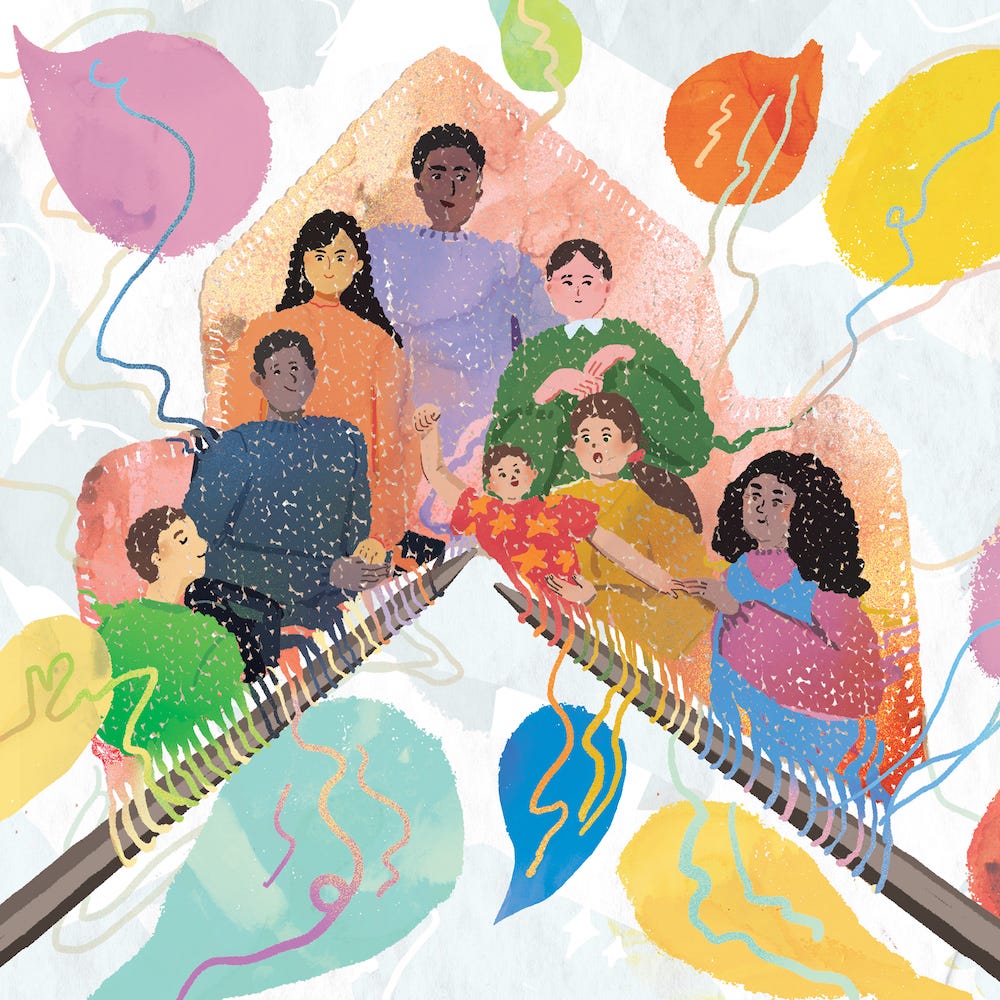
I am grateful to get to encounter folks in the midst of real effort. I field the emails asking for training workshops, for lists of materials, for help communicating about what accessibility looks like for a given setting. But I have the privilege of having grown up seeing disability as a source of inspiration for action, for rallying community, as something that is lived publicly in large part because it is also ordinary. And, more than that, I have the advantages of an education in disability as both a political and a theological category. These aren’t the experiences most people bring to the church.
As we look toward the next season of programming, we’re going back to school again. Some of you may know my series, Back to School with Bird from a few years ago, which focused on neurodiversity 101 topics. I’ll be back this year with some disability resource primers – how and what we communicate, what tools we’re equipped with, how we can become disability advocates in our settings. Because saying “All Are Welcome Here!” or “Y’all means All” isn’t enough.
Resource Round-Up
Summer can seem like the quiet season in the church, but the work is always happening. Here are some recent highlights:
Does your church have a children’s sermon? If so, I hate to break it to you: the pros (including me) agree that they’re not a great mode of engagement and it’s time to retire the practice. Check out “Good New for All Ages: Preaching to the Smaller Set” in the most recent issue of Kerygma from the Episcopal Preaching Foundation – I’m interviewed alongside such fabulous folks as Wendy Claire Barrie and Sarah Bentley Allred on what meaningfully preaching to children can look like.
Speaking of all that imago dei stuff above, I can’t wait for my new shirt from 3E Designs to get here! It says “imago dei” on the front and back and on the back it’s surrounded by designs representing different disabilities.

After a period of hiatus, the Journal of Childhood and Religion is experiencing new life under the leadership of Godly Play’s associated academic arm, The Center for the Spirituality of Childhood. It’s first issue back is a Festschrift dedicated to the life and work of Godly Play’s founder Jerome Berryman. It’s a really beautiful combination of articles that dig into Jerome’s archives, examine newer research and practices rooted in his work, and that generally reflects on the extraordinary gift he has given us as Christian Formation professionals and as disciples ourselves.
Roots & Wings continues to do incredible work interrogating what it means to lead intergenerational Christian lives. One of their recent posts asks an important question: What about the parents who want to worship without their children? I’m not a parent but I resonate deeply with this question, specifically because I am a much-older sibling and the deeply serious first child character (I’m 16 years older than the younger of my two sisters). I spent a number of years really disliking worshiping with my siblings because I found them distracting.
Do you know how I like to worship now? I like to worship with other people’s kids – which is one of the suggestions the article offers: play matchmaker between other adults and families with young children. The children are all of our responsibility.Speaking of Roots & Wings, the second cycle of their Intergenerational Worship fellowship is taking applications! You have to be serving in an Episcopal context and have influence on worship decision-making. I had the pleasure of being a speaker on disability and intergenerational worship for this program’s first run and that group of fellows was really doing compelling, creative work around worship for all people.
We officially have the full three-level complement of the Rev. Mariann Edgar Budde’s books on bravery: the original How We Learn to Be Brave for adults, the YA We Can Be Brave, and now the picture book edition, I Can Learn to Be Brave. I love when books do this because it makes for really great intergenerational book club opportunities – now is a good time to consider creating a formation program with these for the fall!

That’s all for now today! The alternating week summer schedule may get a bonus post next week because I’m preaching at my home parish on Sunday July 24, so I’ve got some scripture to digest.
Until then –
Peace,
Bird