
While It Is Day
This is the time to love.

Dear Friends,
New England is defrosting! I found the fog light cover I popped off moving our car last week because it emerged from the snow piles! My wife flew away from a house surrounded by 3 feet of snow a little over a week ago and will return in a few more days to perhaps no snow at all. The seasons! – Strange little miracles!
Or something like that.
But truly, the way the world turns on its axis, migrating along its path, the biggest and smallest thing at the same time, is a particular cradle of wonder when it suddenly seems like the world has suddenly remembered your name and is inviting you to join it again.
I wonder if that is what the first Easter felt like?
Or, maybe, that’s what Jesus sounded like in the ears of the man who was blind but now could really see in this Sunday’s lectionary.
While It Is Day
Longer-time readers are probably not surprised to hear that I have come to the story of man, blind since birth, who is made to see while in the midst of working on a disability-related presentation/program. I was updating the presentations and projects on my resume recently and it’s disability all the way down. (Because, guess what, disability is everywhere.)
But truly, not only do I think about this and other healing stories a lot, I am finding that this particular iteration from John’s Gospel speaks to me in a particular way this year. (You are an older and wiser child now - I wonder what you will hear?)
In last Sunday’s Gospel passage, the lines that really stood out to me were about the way in which we find ourselves in the midst of a work already in progress: “For here the saying holds true, ‘One sows and another reaps.’ I sent you to reap that for which you did not labor. Others have labored, and you have entered into their labor.”
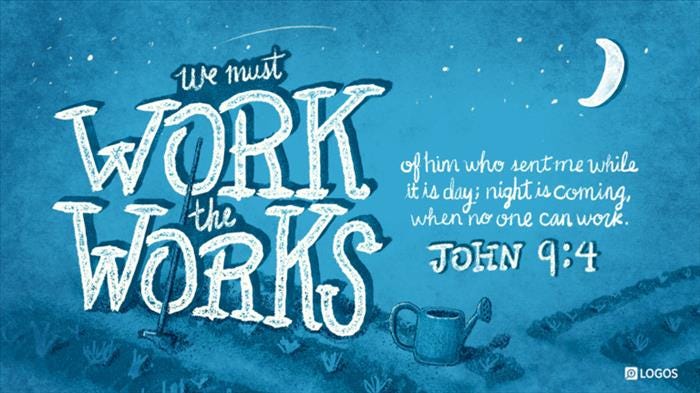
In healing the blind man and being accused of breaking the Sabbath, Jesus responds with a sense of urgency. His work must be done while it is day – he cannot delay it in the name of the law, for people and the Gospel, the Good News that is for the people, come before the law.
As for the healing? Well, the healing is about works, about revelation, about the word. It is not about functional vision. It is about a faith that transcends a sense of having been blessed and favored. Jesus can and does heal this particular man because he is someone who really hears. As the man says to his fellows, “We know that God does not listen to sinners, but he does listen to one who worships him and obeys his will.”
These words are meant to describe Jesus - that Jesus could not do such acts if he was not sent by God in much the way that Moses was sent. But really, this man, healed of affliction, is a model to the pharisees and to others: your blindness is of the heart. You hear and see and yet you do not profess the Gospel that stands before you. And yet this man, set on the margins by disability, professes the coming of the Son of God who transforms the world in our very presence.
His time is limited. He knows his end is near. He must do the works of the one who sent him while it is day, before that strange still silence of Holy Saturday.
What of the Body?
And what of healing? And what of the healing that doesn’t come?
I’m trying to find the last time I wrote about healing. Undoubtedly it wasn’t that long ago (it’s sort of a preoccupation of mine). There’s my old “In Pursuit of a Cure” post from several years ago now that proclaims Kate Bowler’s refrain, “there’s no cure for being human.” More recently you’ll find my post, “Do You Want To Be Made Well?” about the man cured of paralysis and the contagious nature of hope.
There are certainly more (and I also commend to you this post from Earth & Altar on agency in healing stories), but the point is this: perfection of body is not the promise, not even here. We don’t know anything else about the man blind since birth, but it’s unlikely that was his only affliction, if only because it was approximately 30 CE– medical care wasn’t so great, and medical care for people already suffering affliction was surely not a priority.
Purity of body is not the goal. Perfection is not the goal. But neither is pure suffering. The will of God is in the drawing together, the coming near. And it is particularly in the coming near to those who are in pain. It’s a good reminder for all of us, but an essential reminder when coming to these stories with children and young people. In a culture of “health is wealth,” of endless cure propositions, cure cannot be our Gospel.
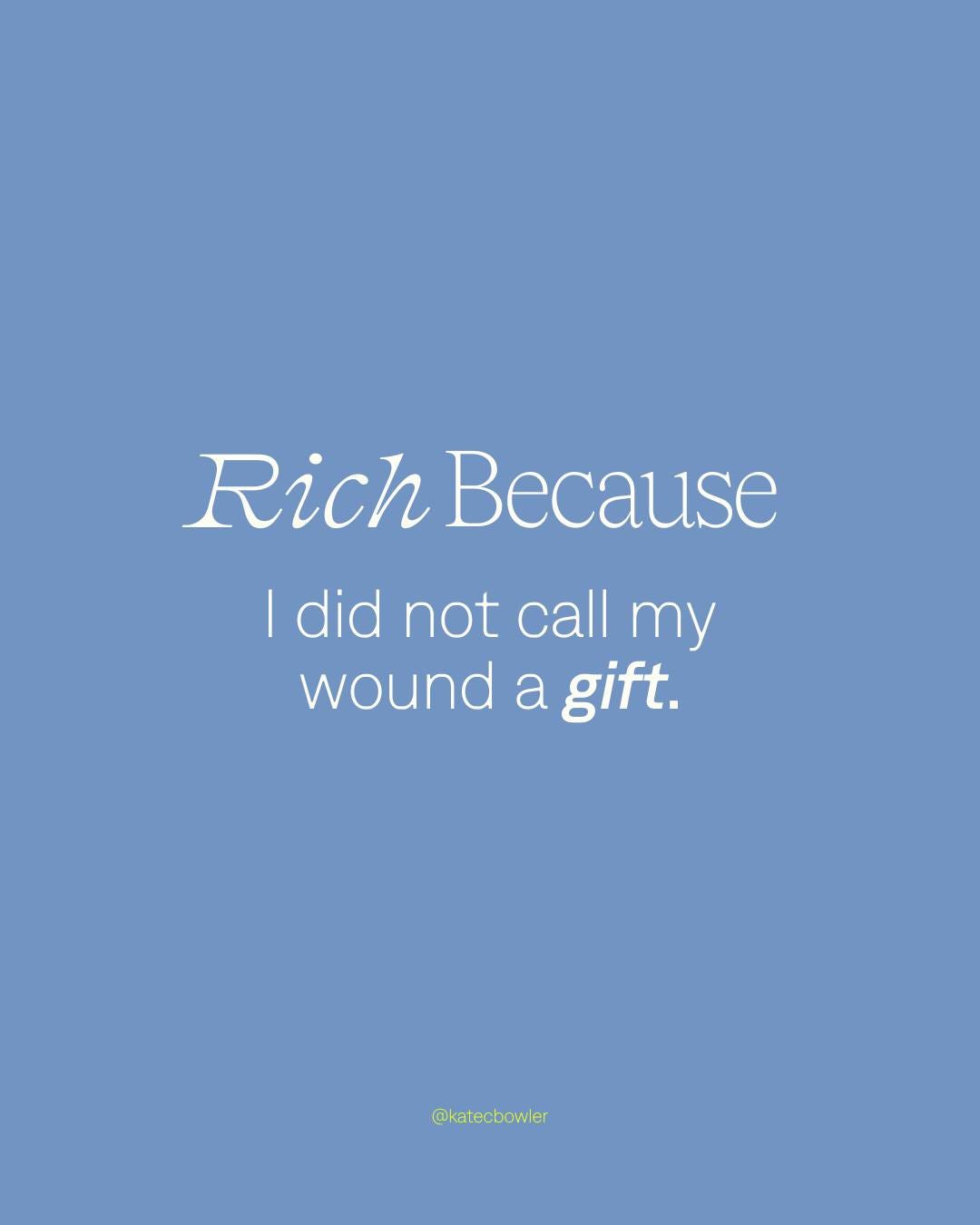
As per a different, more recent Kate Bowler take, I can be “[r]ich because I did not call my wound a gift.” I love Job, but I’m not Job. I do not need to praise God for my suffering, but I do not need to demand God make me otherwise. I can live in the messy unfinished-ness of it all and that too can be wealth because it is true. God isn’t finished with us yet.
As we come closer to Holy Week, we also come closer to the Christ who is wounded, broken for us and for our salvation. That is the only brokenness we need praise: the brokenness of the God who was broken by love, and the love that in turn breaks us open towards each other.
Resource Round-Up
I’m plugging along on my annual revision cycle for my Sensory Stations of the Cross liturgy, which is a good reminder that everyone should spend some time with And Also With You pod’s episode on Talking About Jesus on the Cross - With Kids. I’m admittedly a little biased toward this particular guest, but it’s such an important topic that needs to be addressed with care and theological responsibility.
If you’ve ever used Godly Play’s Christmas Eve liturgy, you’ve probably found yourself wondering, “why aren’t there more of these?!” Well, good news – that’s the focus of a new Lilly Grant. I had a great time participating in one of the initial focus groups, which were in overwhelming demand. Luckily, Godly Play has opened up their preliminary survey for more input so that your voice can be heard in regard to this important work.
I’m not sure any of you come here for my music recommendations (but y’all surprise me all the time, so who knows!) – but a few new tracks I’m loving from the progressive Christian genre: City of My Peace by Jess Ray and Walking Through Walls by Sandra McCracken, are getting some major play over here.
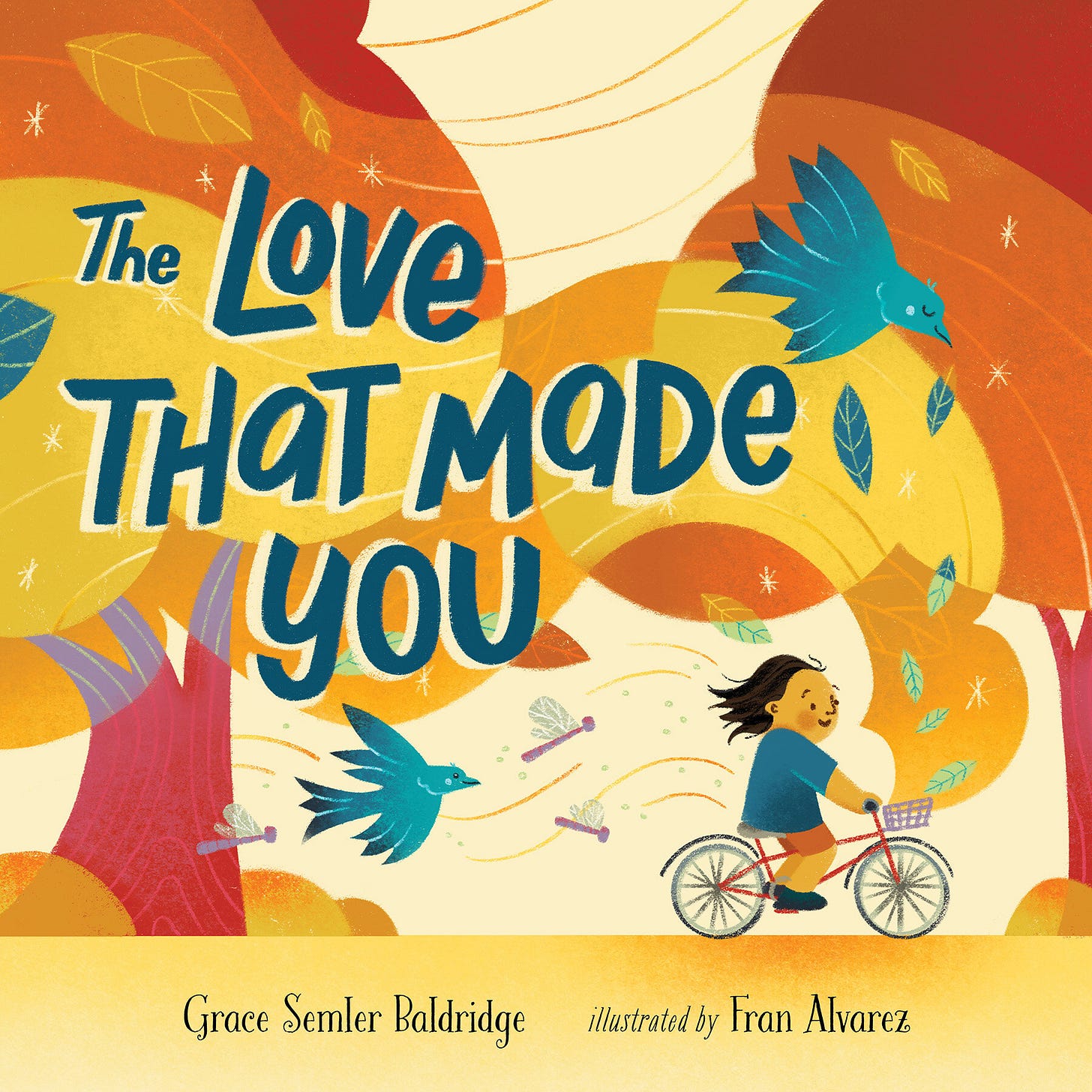
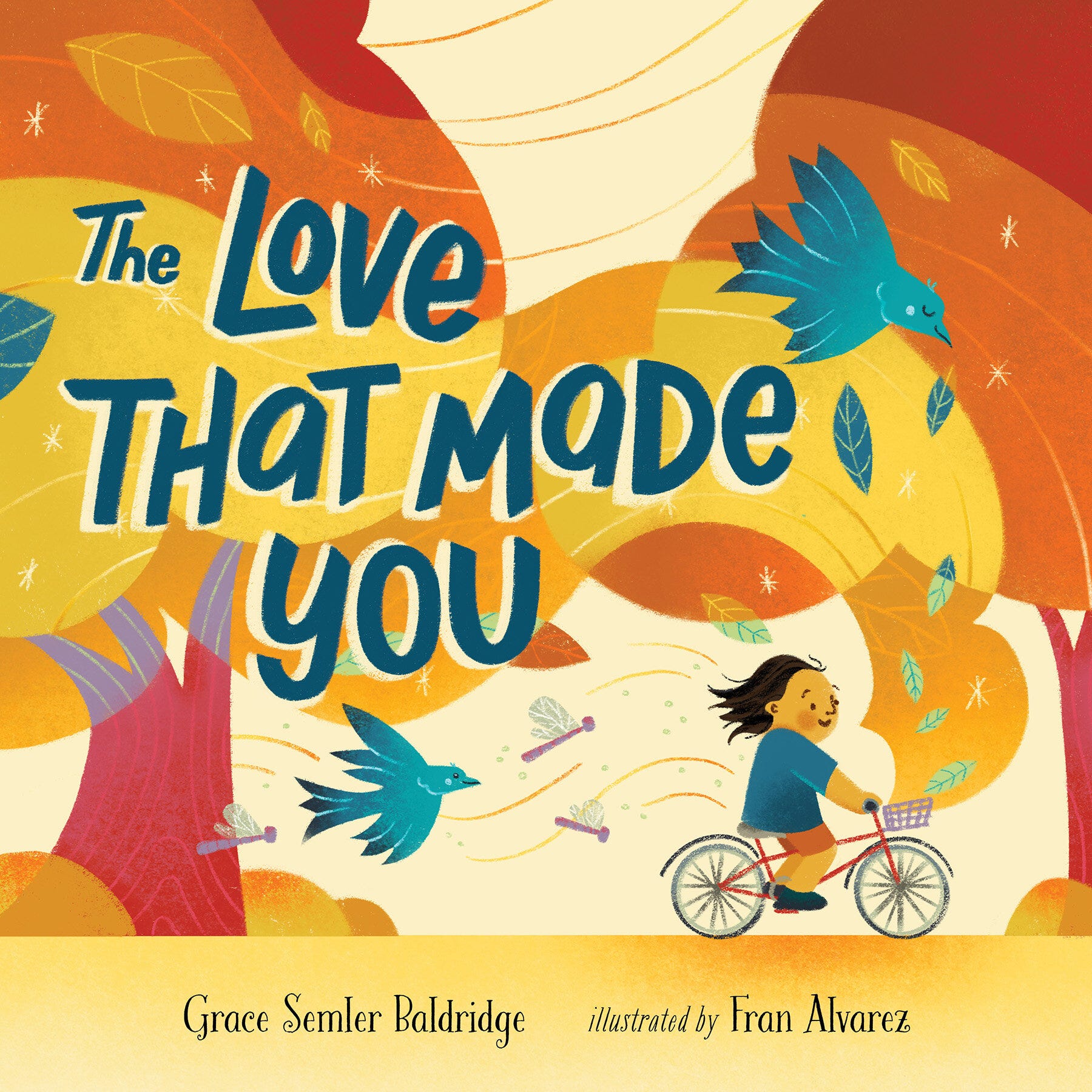
In related progressive Christian-music related news that isn’t actually music, Grace Semler Baldridge (aka the musician Semler) has a charming new children’s book out, The Love That Made You. It’s a lovely option across the range of religious sensibilities – Grace is a PK with real sensitivity to faith-based trauma and abuse and this book will connect with families of deep faith as well as those who have been on a path of deconstruction.
Alright friends. Godspeed you as Holy Week rapidly approaches.
Peace,
Bird